

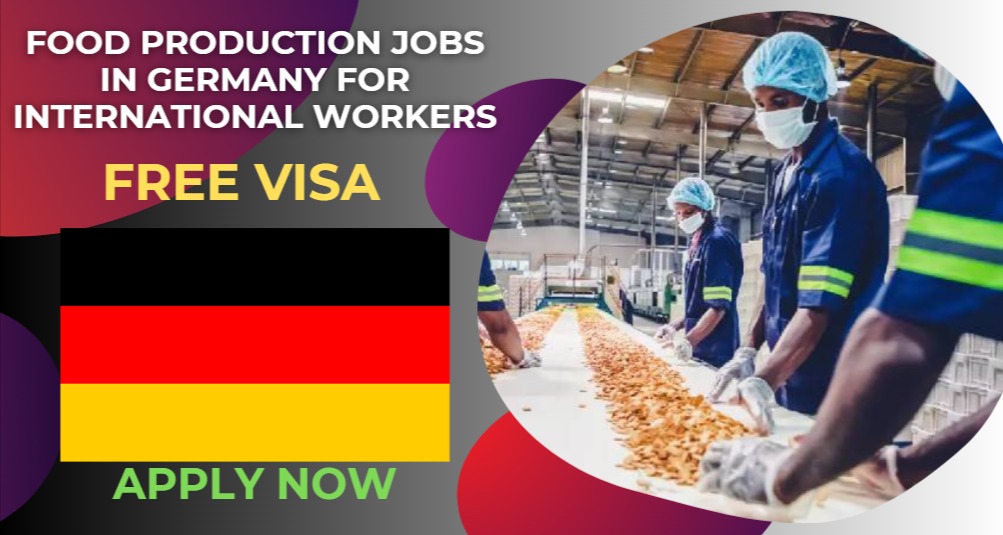
Food Production Jobs in Germany for International Workers: Germany’s food production industry (Ernährungsindustrie) is a major economic sector, offering stable employment in meat processing, bakery, dairy, beverage, and confectionery manufacturing. For international workers, these roles can provide a pathway to skilled employment, but navigating the specific visa, qualification, and language requirements is essential.
Overview of the German Food Production Sector
The industry is characterized by high standards of hygiene, advanced technology, and strict regulations (governed by the LFGB – Food and Feed Code). Key regions include Lower Saxony (meat processing), Bavaria (dairy, brewing), North Rhine-Westphalia, and Baden-Württemberg.
Common Job Roles for International Workers
-
Production Line Worker (Fachkraft für Lebensmitteltechnik – Assistant Level): Operating machinery, monitoring processes, and packaging on automated lines.
-
Butcher/Meat Processor (Metzger/Fleischer): Skilled trade in slaughtering, cutting, and processing meat. Requires formal training.
-
Food Quality Assistant: Performing basic quality checks and hygiene monitoring.
-
Machine Operator for Food Technology: Specialized role running specific production machinery.
-
Packaging & Logistics Worker: Handling finished goods in warehouse settings.
Visa Pathways for International Workers
Germany’s immigration system prioritizes skilled workers. There is no general “unskilled” work visa for non-EU citizens. The relevant pathways are:
1. The Skilled Worker Visa (Fachkräfteeinwanderungsgesetz)
This is the primary and most relevant pathway for food production roles. It has two tracks:
-
Track A: With a Recognized Vocational Qualification
-
You must have completed at least 2 years of vocational training in a related field (e.g., butcher, baker, dairy technologist) that is recognized as equivalent to a German qualification.
-
You need a concrete job offer from a German employer that matches this qualification.
-
-
Track B: With Professional Experience
-
If you do not have a formal qualification, you may qualify if you have at least 3-5 years of full-time, relevant professional experience in food production.
-
You must have your experience/certificates officially recognized by the relevant German authority (often the Chamber of Industry and Commerce – IHK).
-
You must prove German language skills at level B1.
-
You need a job offer from a German employer.
-
2. The EU Blue Card
-
For: University graduates with a recognized degree and a high-salary job offer (2024 threshold: €45,300 for shortage occupations).
-
Relevance: Could apply to roles like Food Engineer, Production Manager, or Quality Assurance Manager, but not for most line-worker positions.
3. The Opportunity Card (Chancenkarte)
-
A new points-based residence permit to search for a job in Germany for up to one year.
-
Points are awarded for qualifications, experience, language skills (German/English), age, and connection to Germany.
-
This could be an entry route for experienced workers to find an employer willing to sponsor their Skilled Worker Visa.
Key Requirements: Qualifications, Language & Certifications
-
Qualification Recognition: Your foreign vocational certificate must be checked for equivalence via the ANABIN database or through a Statement of Comparability from the Central Office for Foreign Education (ZAB). This is a mandatory step for the visa.
-
German Language Skills:
-
For the Skilled Worker Visa via experience (Track B), B1 level is mandatory.
-
For jobs on the factory floor, even if not legally required for Track A, A2/B1 is de facto essential for safety instructions, standard operating procedures (SOPs), and team integration.
-
The Opportunity Card awards points for language, making B1 or higher highly advantageous.
-
-
Mandatory Health & Hygiene Certifications:
-
Food Hygiene Instruction (Belehrung nach §43 Infektionsschutzgesetz): A mandatory certificate from the local health department, proving you are free from contagious diseases and understand hygiene rules. You need this before starting work.
-
HACCP Training: Knowledge of Hazard Analysis Critical Control Points is often required or provided on the job.
-
Step-by-Step Process for Securing a Job
Step 1: Qualification & Language Preparation
-
Have your vocational training or professional experience officially assessed.
-
Enroll in German language courses immediately. Aim for at least B1.
Step 2: Secure a Job Offer
-
Job Portals: Use Arbeitsagentur.de (Federal Employment Agency), StepStone.de, Indeed.de. Search for “Fachkraft Lebensmitteltechnik“, “Produktionsmitarbeiter Lebensmittel“, “Metzger“.
-
Company Websites: Target large German food producers (Tönnies, PHW Group, Müller Group, Dr. Oetker, Haribo, Hochland).
-
Recruitment Agencies: Specialized agencies like PersonalConcept or DIS AG often recruit for the food industry.
Step 3: Visa Application
-
With your job contract and recognized qualifications, apply for a National Visa for Employment Purposes at the German embassy in your home country.
-
The German employer will typically initiate the pre-approval process with the Federal Employment Agency.
Step 4: Arrival & Integration
-
Upon arrival, get your residence permit (Aufenthaltserlaubnis) at the local Foreigners’ Office (Ausländerbehörde).
-
Complete the §43 Infection Protection Act instruction at the health office.
-
Attend the company’s safety and hygiene induction.
Salary, Working Conditions & Important Notes
-
Wages: Governed by collective bargaining agreements (Tarifverträge). Gross monthly salaries for skilled food production workers typically range from €2,600 to €3,400, with higher pay for shift work (Schichtzulagen).
-
Conditions: Work often involves early morning or shift patterns. The environment is hygienic but can be cold (meat processing) or noisy. Safety standards are extremely high.
-
Warning on “Ungelernte” (Unskilled) Roles: While some companies might hire helpers, securing a work visa for an unskilled position from outside the EU is virtually impossible. The system is designed for skilled professionals (Fachkräfte).
-
Practical Tip: Completing a recognition process for your experience (Anerkennung der Berufsqualifikation) is your most valuable investment, even if it takes time and effort.
Final Summary
Food production jobs in Germany are accessible to international workers primarily through the Skilled Worker Visa, requiring either a recognized vocational qualification or substantial professional experience combined with B1 German.
Your realistic action plan is:
-
Get your qualifications/experience officially recognized.
-
Achieve German B1 proficiency.
-
Secure a job offer from a German employer that matches your skilled profile.
-
Apply for the correct visa.
The process is structured and rigorous, reflecting Germany’s focus on skilled labor. For experienced food production workers willing to meet the language and qualification standards, it offers a stable and respected career path in a high-quality industry. Begin your research on the official Make it in Germany website.
Disclaimer
This job information is shared for educational and informational purposes only.
Any discussion of visa categories is based on general immigration laws and publicly available information.