
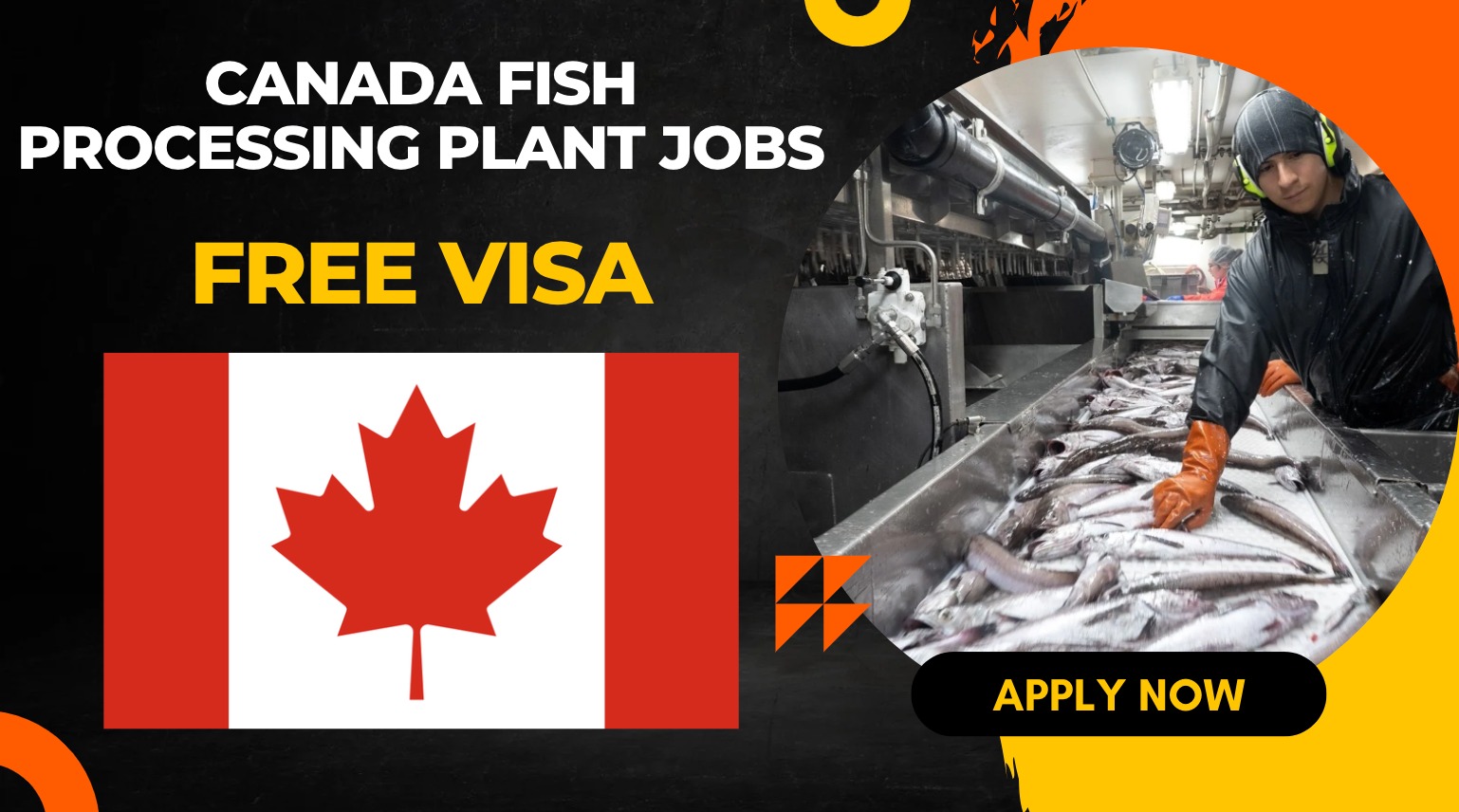
Canada Fish Processing Plant Jobs with LMIA 2026: Canada’s fish processing industry is a vital part of the economy, particularly in Atlantic provinces like Quebec, New Brunswick, and Prince Edward Island. These plants process millions of pounds of seafood annually—everything from lobster and crab to cod and herring—for markets across North America and around the world. For overseas workers, fish processing jobs offer a realistic pathway to legal employment in Canada through the Temporary Foreign Worker Program (TFWP) with Labour Market Impact Assessment (LMIA) sponsorship. This guide explains everything you need to know—current job openings with LMIA approval, upcoming policy changes for 2026, salary expectations, requirements, and step-by-step application instructions.
Understanding LMIA and Why It Matters
What Is an LMIA?
A Labour Market Impact Assessment (LMIA) is a document that a Canadian employer must obtain from Employment and Social Development Canada (ESDC) before hiring a foreign worker. A positive LMIA proves that:
There is a genuine need for a foreign worker to fill the job
No Canadian citizen or permanent resident is available to do the job
The hiring will have a positive or neutral impact on the Canadian labor market
For overseas workers, a positive LMIA is essentially your golden ticket—it confirms that the government has approved your employer to hire you from abroad and support your work permit application.
How the LMIA Process Works
The process is employer-driven, meaning your future employer does the heavy lifting:
Step 1: Employer applies for LMIA from ESDC, proving they cannot find Canadian workers
Step 2: If approved, employer receives positive LMIA and sends you the approval letter
Step 3: You apply for your work permit using the LMIA approval
Step 4: Once approved, you can travel to Canada and start working
The job postings in this guide are from employers who have either already received LMIA approval or have LMIA applications currently under review.
Real Fish Processing Jobs with LMIA for 2026
Here are actual fish processing positions currently available with LMIA sponsorship. These are verified listings from official sources.
Fish Processing Plant Labourer – Borden-Carleton, Prince Edward Island
| Detail | Information |
|---|---|
| Employer | Phillips Bridge Seafood ULC |
| Location | Borden-Carleton, PE C0B 1X0 |
| LMIA Status | Approved |
| Wage | $18.25 per hour |
| Hours | 30 to 60 hours per week |
| Vacancies | 15 positions |
| Start Date | As soon as possible |
| Employment Type | Seasonal, Full-time |
| Shifts | Early morning, Day, Evening, Night, Weekend, Overtime required |
| Language | English required |
| Education | No degree, certificate or diploma needed |
Job Duties:
Transport fish and shellfish to work area
Weigh fish or shellfish, record weight, and pack fish in ice
Clean machines and immediate work areas
Keep work areas neat and orderly
Maintain halls and floors free of slip and trip hazards
Remove waste materials from work areas
Sort fish according to species, weight, and destination
Physical Requirements:
Lift and carry over 45 kg (100 lbs)
Perform repetitive tasks
Handle heavy loads safely
Stand for extended periods
Attention to detail required
Plant Labourer – Fish Processing – Rimouski, Quebec (26 Vacancies)
| Detail | Information |
|---|---|
| Employer | Pêcheries de l’Estuaire Inc. |
| Location | Rimouski, QC G5M 0M7 |
| LMIA Status | Approved |
| Wage | $18.00 per hour |
| Hours | 30 to 60 hours per week |
| Vacancies | 26 positions |
| Start Date | As soon as possible |
| Employment Type | Seasonal, Full-time |
| Shifts | Early morning, Morning, Day, Evening, Night, Weekend, Flexible hours |
| Language | English or French fluency required |
| Education | No degree, certificate or diploma needed |
| Experience | Skill required (previous experience an asset) |
Job Duties:
Transport fish and shellfish to work area
Weigh fish or shellfish, record weight, and pack fish in ice
Clean machines and immediate work areas
Keep work areas neat and orderly
Remove waste materials from work areas
Sort fish according to species, weight, and destination
Fish-Processing Plant Handler – Grande-Rivière, Quebec (32 Vacancies)
| Detail | Information |
|---|---|
| Employer | Poisson Salé Gaspésien Ltée |
| Location | Grande-Rivière, QC G0C 1V0 |
| LMIA Status | Under Review |
| Wage | $19.00 per hour |
| Hours | 40 hours per week |
| Vacancies | 32 positions |
| Start Date | March 10, 2026 |
| Employment Type | Seasonal, Full-time |
| Language | French required |
| Education | No degree, certificate or diploma needed |
| Experience | Will train |
Job Duties:
Transport fish and shellfish to work area
Clean machines and immediate work areas
Package products
Clean and prepare fish and shellfish
Set up and operate machines to can, bag, box or otherwise package fish and seafood products
Source: Government of Canada Job Bank
Plant Labourer – Fish Processing – Rimouski, Quebec (5 Vacancies)
| Detail | Information |
|---|---|
| Employer | Pêcheries de l’Estuaire Inc. |
| Location | Rimouski, QC G5M 0M7 |
| LMIA Status | Under Review |
| Wage | $18.00 per hour |
| Hours | 30 to 70 hours per week |
| Vacancies | 5 positions |
| Start Date | February 3, 2026 |
| Employment Type | Seasonal, Full-time |
| Shifts | Early morning, Morning, Day, Evening, Night, Weekend, On call, Flexible hours |
| Language | English or French |
| Education | No degree, certificate or diploma needed |
| Experience | Experience an asset |
| Benefits | Bonus |
Job Duties:
Unload fish and shellfish from fishing vessels and transport by hand to work area
Use forklift to transport unloaded fish and shellfish
Transport fish and shellfish to work area
Condition fish filets for wrapping or freezing
Weigh fish or shellfish, record weight and pack fish in ice
Clean machines and immediate work areas
Measure and dump ingredients into hoppers of mixing and grinding machines
Sort fish according to species, weight and destination
Work Environment:
Noisy, odours, cold/refrigerated, wet/damp
Fish Plant Worker – Neguac, New Brunswick (5 Vacancies)
| Detail | Information |
|---|---|
| Employer | Barry Group Inc. |
| Location | Neguac, NB E9G 1N5 |
| LMIA Status | Under Review |
| Wage | $18.75 per hour |
| Hours | 30 to 70 hours per week |
| Vacancies | 5 positions |
| Start Date | February 25, 2026 |
| Employment Type | Seasonal, Full-time |
| Shifts | Early morning, Morning, Day, Evening, Night, Flexible hours |
| Language | English or French |
| Education | No degree, certificate or diploma needed |
| Experience | Experience an asset |
Job Duties:
Inspect fish fillets to determine optimal number and size of fillets
Check products and packaging for defects
Perform corrective machine adjustments as required
Weigh fish or shellfish, record weight and pack fish in ice
Work Environment:
Noisy, odours, cold/refrigerated, wet/damp
Repetitive tasks, physically demanding
Fish Plant Worker – Cap-Pele, New Brunswick (2 Vacancies)
| Detail | Information |
|---|---|
| Employer | Cap Pele Bait Inc. |
| Location | Cap-Pele, NB E4N 1Z7 |
| LMIA Status | Under Review |
| Wage | $18.00 per hour |
| Hours | 30 hours per week |
| Vacancies | 2 positions |
| Start Date | March 16, 2026 |
| Employment Type | Permanent, Full-time |
| Shifts | Early morning, Morning, Day, Night, Weekend, Flexible hours, Overtime available |
| Language | English or French |
| Education | No degree, certificate or diploma needed |
| Experience | Will train |
| Benefits | Dental plan, Health care plan, Vision care benefits, Bonus, Group insurance benefits, Life insurance |
| Special Support | Recruits newcomers and refugees displaced by conflict; supports foreign credential recognition |
Job Duties:
Cut, clean and trim fish or seafood prior to marketing or further processing
Unload fish and shellfish from fishing vessels and transport by hand to work area
Scrape away scales, cut fish, separate fillets and remove scrap parts using knife
Clean machines and immediate work areas
Equipment Experience:
Fish cleaning and cutting machine
Fish meal processing machine
Roe processing machines
Requirements:
Bondable
Repetitive tasks, physically demanding, attention to detail, hand-eye coordination
Standing for extended periods, bending, crouching, kneeling
Flexibility and reliability
Salary Expectations for Fish Processing Jobs
Based on verified job listings, here are the salary ranges for 2026:
| Location | Hourly Wage | Monthly Estimate (40 hrs/week) |
|---|---|---|
| Grande-Rivière, QC | $19.00 | $3,293 |
| Neguac, NB | $18.75 | $3,250 |
| Borden-Carleton, PE | $18.25 | $3,163 |
| Rimouski, QC | $18.00 | $3,120 |
| Cap-Pele, NB | $18.00 | $3,120 |
Important Note: Many positions offer 30 to 70 hours per week, meaning significant overtime potential. During peak season, workers can earn substantially more than the base estimates.
Additional Compensation
Overtime pay: Premium rates for hours beyond standard workweek
Bonuses: Some employers offer performance or seasonal completion bonuses
Benefits packages: Select employers provide health benefits, dental plans, vision care, and group insurance
Overtime available: Many positions explicitly mention overtime opportunities
Physical Requirements and Working Conditions
Fish processing work is demanding. Based on job listings, workers must be prepared for:
Physical Demands
Lift and carry over 45 kg (100 lbs)
Stand for extended periods
Perform repetitive tasks
Handle heavy loads safely
Bend, crouch, and kneel regularly
Maintain hand-eye coordination
Environmental Conditions
Noisy work environments
Odours from fish and seafood processing
Cold/refrigerated temperatures (often near freezing)
Wet/damp conditions throughout facility
Early morning, evening, and night shifts common
Weekend work required
Flexible hours and on-call shifts possible
Required Skills
Attention to detail for quality control
Ability to follow safety procedures
Teamwork and reliability
Flexibility with changing schedules
Major Policy Changes Coming in 2026
According to multiple sources, the Canadian government is preparing the most significant reform of the Temporary Foreign Worker Program in a decade . These changes will directly affect fish processing workers.
1. Industry-Specific Work Permits
The most important reform for fish processing workers: industry-specific work permits will be introduced.
Key changes:
Workers will no longer be tied to a single employer
You will be able to change jobs within the same industry freely
Permits will be valid for up to two years
This is a massive shift from the current system where workers are “locked in” to one employer. It gives you real freedom to leave a bad situation and find better working conditions .
Implementation: Expected to first launch in agriculture and fish processing in 2026, with potential expansion to other industries later .
2. Wage Deduction Rules
New rules will allow employers—particularly in fish processing—to deduct costs for:
Accommodation
Utilities (electricity, water)
Transportation
Potential impact: While this can reduce employer costs, it could lower your take-home pay by 10-15% . The government is expected to set clear limits and require detailed receipts .
3. Housing Standard Changes
The government is considering removing mandatory “indoor temperature protection” requirements for fish processing plants.
Worker impact: This has raised concerns about potential health risks from working in extreme temperatures without adequate protection .
4. LMIA Process Automation
The LMIA approval process is moving toward automation and digitization.
What this means:
Less paperwork
Faster processing times
Potential for “rapid approval” for high-demand industries like fish processing
For employers needing workers quickly, this could significantly speed up hiring .
5. Agricultural LMIA Advertising Pause
Through the end of 2025, agricultural employers (including fish processing) can apply for LMIA without providing proof of advertising .
Note: Employers must still maintain complete recruitment records for auditing purposes .
Eligibility Requirements for Fish Processing Jobs
Basic Qualifications
Age: Minimum 18 years (no formal upper limit)
Education: No degree, certificate or diploma required for most positions
Experience: Many positions will train you; some prefer experience but it’s not mandatory
Language: English or French proficiency required (varies by location)
Physical fitness: Must meet demanding physical requirements (lift 100+ lbs)
Bondable: Some positions require you to be bondable
Work Authorization Requirements
Critical Note: These positions are open to foreign workers through LMIA sponsorship. However, the job postings state:
“You can apply if you are: a Canadian citizen, a permanent resident of Canada, a temporary resident of Canada with a valid work permit. Do not apply if you are not authorized to work in Canada.”
This is standard language—overseas workers should still apply, but understand that the employer will only proceed if they have approved LMIA.
How to Find Genuine Fish Processing Jobs with LMIA
1. Use Official Government Job Bank
The Government of Canada Job Bank (jobbank.gc.ca) is your most reliable source. Search for “fish processing” and filter for jobs with “LMIA requested” or “LMIA approved” status.
2. Target Key Provinces
Fish processing jobs with LMIA are concentrated in:
Quebec – Grande-Rivière, Rimouski (dozens of positions available)
New Brunswick – Neguac, Cap-Pele
Prince Edward Island – Borden-Carleton
3. Search Terms to Use
Try these keywords:
“Fish processing plant labourer”
“Fish plant worker”
“Fish processing handler”
“Seafood processing”
“Plant labourer fish processing”
4. Apply Through Listed Channels
Each job posting includes specific application instructions. Follow them precisely—many are posted by licensed third-party recruiters.
5. Be Aware of Application Windows
The job postings have expiration dates. For example, several positions expire January 1, 2026 . Apply before these deadlines.
Important Worker Rights and Protections
Your Rights as a Temporary Foreign Worker
You must be paid at least the wage stated in your job offer
You are entitled to safe working conditions
You cannot be punished for reporting violations
You have the right to keep your own passport and documents
Upcoming Protections
The 2026 reforms aim to strengthen worker protections by:
Giving you freedom to change employers within your industry
Requiring transparency in wage deductions
Potentially establishing clearer health and safety standards
If Problems Arise
Call the Temporary Foreign Worker Program tip line (number provided in job postings)
Contact your country’s consulate or embassy in Canada
Seek assistance from worker advocacy organizations
Step-by-Step Application Summary
Phase 1: Preparation (Now)
Assess your eligibility – Do you meet physical requirements (lift 100+ lbs)?
Learn basic English or French – Language skills are essential
Prepare documents – Valid passport, any relevant certificates
Research target provinces – Quebec, New Brunswick, Prince Edward Island
Save money – For visa application fees and initial expenses
Phase 2: Job Search (Immediately)
Visit Government of Canada Job Bank – Search for LMIA-approved fish processing jobs
Identify active postings – Several positions have vacancies for 2026
Apply through listed channels – Follow instructions carefully
Never pay for job applications – Legitimate employers do not charge fees
Phase 3: Job Offer and LMIA
Receive job offer from employer with approved or pending LMIA
Employer provides LMIA approval letter (if approved)
Review contract carefully – Confirm wages, hours, and conditions
Phase 4: Work Permit Application
Apply for Canadian work permit using LMIA approval
Submit required documents – Passport, job offer, LMIA letter
Provide biometrics (fingerprints and photo)
Wait for processing – Times vary by country
Phase 5: Travel and Work
Receive work permit approval
Travel to Canada before permit expires
Start working at your assigned fish processing plant
Keep records – Pay stubs, employment documents
Final Honest Summary
| Question | Answer |
|---|---|
| Are fish processing jobs with LMIA real? | ✅ Yes. Multiple verified listings on the Government of Canada Job Bank offer LMIA-approved positions for 2026 . |
| What is an LMIA? | ✅ A Labour Market Impact Assessment proves an employer can legally hire you from abroad . |
| Do employers really sponsor LMIA? | ✅ Yes. The job postings explicitly state “LMIA requested” or “LMIA approved” . |
| What salary can I expect? | 💰 $18.00 – $19.00 per hour, with overtime potential . |
| Is accommodation provided? | ⚠️ Not specified in most listings, but upcoming 2026 reforms will allow employers to deduct housing costs . |
| Do I need experience? | ⚠️ Many positions will train you; some prefer experience but it’s not mandatory . |
| Do I need to speak English or French? | ✅ Yes. Most positions require English or French proficiency . |
| How many jobs are available? | ✅ At least 85 positions from verified listings (32 + 26 + 15 + 5 + 5 + 2) . |
| Is there a path to permanent residency? | ⚠️ Temporary work permits can lead to permanent residency through programs like the Provincial Nominee Program, but it’s not automatic. |
| Is this pathway realistic? | ✅ Yes, with 85+ verified positions and LMIA sponsorship actively available . |
Canada Fish Processing Plant Jobs with LMIA 2026: Fish processing jobs in Canada with LMIA sponsorship offer a genuine, structured opportunity for overseas workers willing to perform physically demanding work. The numbers speak for themselves—at least 85 confirmed vacancies across multiple provinces with wages between $18.00 and $19.00 per hour .
The 2026 policy reforms will make this pathway even more attractive by giving you the freedom to change employers within the industry and streamlining the LMIA process . These changes signal Canada’s commitment to treating foreign workers more fairly while addressing critical labor shortages.
Your success depends on:
Finding legitimate employers through the Government of Canada Job Bank
Meeting physical requirements (lift 100+ lbs, stand for long periods)
Having basic English or French skills
Applying before posting deadlines
Being vigilant against scams (never pay for job offers)
Start your search now on the official Job Bank website, target provinces like Quebec, New Brunswick, and Prince Edward Island, and follow each job’s specific application instructions. Canada’s fish processing plants need dedicated workers, and the LMIA pathway is open for 2026.
Disclaimer
This job information is shared for educational and informational purposes only.
Any discussion of visa categories is based on general immigration laws and publicly available information