

Factory Assembly Line Jobs in Australia No Degree: Factory assembly line jobs are a core part of Australia’s manufacturing sector and offer stable, entry-level employment without requiring a university degree. These roles are hands-on, process-driven, and essential for producing everything from food and beverages to electronics and automotive parts. This guide explains what the work involves, where to find it, and how to get started.
Understanding Assembly Line Work
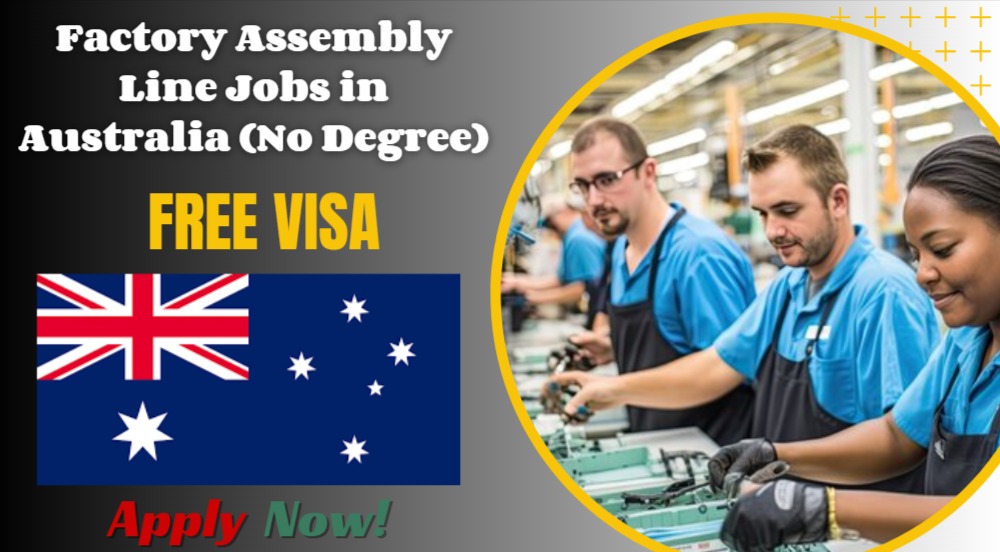
An assembly line worker, often called a production worker or process worker, performs repetitive tasks at a workstation as products move along a conveyor belt or production line. The focus is on speed, accuracy, and adherence to strict safety and quality standards.
Common Duties and Responsibilities
Typical tasks include assembling product components by hand or with basic tools, operating or monitoring machinery at your station, conducting visual quality checks to spot defects, packing finished goods into boxes or onto pallets, cleaning and maintaining your work area, and reporting any equipment faults or safety hazards to a supervisor.
Key Industries and Locations
Manufacturing hubs are spread across Australia’s major cities and regional centres.
-
Major Sectors: Food and beverage processing, packaging, plastic product manufacturing, metal fabrication, electronics assembly, pharmaceutical and medical device production, and automotive component manufacturing.
-
Primary Locations: Industrial suburbs of Melbourne, Sydney, Brisbane, Perth, and Adelaide. Key regional manufacturing centres include Geelong (VIC), Albury-Wodonga (NSW/VIC), and the Hunter Valley (NSW).
Visa Pathways for Foreign Workers
For those coming from overseas, the right to work is the first essential step.
-
Working Holiday Visa (Subclass 417 & 462): This is the most common and accessible visa for temporary assembly line work. It allows young adults (typically 18-30) from eligible countries to work for any employer for up to 1-3 years. No prior sponsorship is needed.
-
Temporary Skill Shortage (TSS) Visa (Subclass 482): This employer-sponsored visa is highly unlikely for basic assembly line roles. It is reserved for skilled occupations that usually require formal qualifications or extensive experience.
-
Student Visa (Subclass 500): Allows limited work hours (currently 48 hours per fortnight) during study periods, which can include part-time factory work.
Skills and Attributes Employers Want
No degree is needed, but employers look for specific practical qualities:
-
Reliability and Punctuality: Showing up on time for every shift is critical for production schedules.
-
Ability to Follow Procedures: Strictly adhering to safety and quality instructions is non-negotiable.
-
Manual Dexterity and Stamina: Good hand-eye coordination and the ability to stand and perform repetitive tasks for long periods.
-
Teamwork: Working effectively with others on the line.
-
Safety Consciousness: A proactive attitude towards workplace health and safety.
-
Willingness to Work Shifts: Factories often run 24/7, requiring morning, afternoon, or night shifts.
How to Find and Apply for Jobs
Step 1: Secure Your Right to Work
Obtain the appropriate visa (like the Working Holiday Visa) before you start applying for jobs.
Step 2: Prepare Your Application
Get an Australian Tax File Number. Create a simple, clean resume. Highlight any previous experience in manual work, teamwork, or environments where you followed strict procedures. List any relevant licences (e.g., forklift ticket).
Step 3: Start Your Job Search
-
Online Job Boards: Use Seek, Indeed, and Jora. Search for “process worker,” “assembly worker,” “production worker,” “factory hand.”
-
Recruitment Agencies: Register with industrial labour-hire agencies like AWX, Programmed, Labourforce, or Hays. They have contracts with large manufacturers and are a primary gateway to these jobs.
-
Direct Approach: Look for factories in industrial estates and check their websites for “Careers” sections.
Step 4: Nail the Interview
Be prepared for practical tests. You might be asked to demonstrate basic assembly skills or a maths test. Emphasize your reliability, safety focus, and willingness to work any shift. Ask about training and career progression opportunities.
Pay Rates and Working Conditions
-
Wages: Paid hourly. Entry-level wages typically range from $24 to $30 AUD per hour, plus shift loadings for afternoons, nights, and weekends. Pay is governed by the Manufacturing Award.
-
Conditions: Work is often in large, noisy environments. Temperature-controlled rooms are common in food/pharma sectors. You will be provided with necessary personal protective equipment (PPE). Permanent roles include benefits like paid leave; casual roles offer higher hourly rates.
Career Pathways and Progress
Starting on the line can lead to advancement:
-
Team Leader or Supervisor: After demonstrating reliability and skill.
-
Machine Operator: With training on more complex equipment.
-
Quality Assurance Inspector: Specialising in quality control.
-
Logistics or Warehouse Roles: Within the same company.
Important Warnings
-
Avoid Scams: Never pay anyone money for a “guaranteed” factory job or visa sponsorship for this type of role.
-
Know Your Rights: You must be paid at least the minimum Award wage. Casual employees should receive a higher hourly rate than permanent staff.
-
Safety First: Complete all mandatory inductions. Do not operate machinery you are not trained on.
Final Summary
Factory assembly line jobs in Australia offer a solid entry point into the workforce with no degree required. Success is built on demonstrating a strong work ethic, reliability, and a commitment to safety. The most practical path for foreign workers is the Working Holiday Visa, followed by registering with industrial recruitment agencies. These roles provide stable income, a clear career ladder, and valuable Australian work experience. Begin by securing your visa and TFN, then start contacting agencies and applying online.
Disclaimer
This job information is shared for educational and informational purposes only.
Any discussion of visa categories is based on general immigration laws and publicly available information.