

Poultry Processing Jobs in the USA for Overseas Workers: Poultry processing is a major industry in the United States, with large-scale facilities operating across the country—particularly in the Southeast and Midwest. These plants process millions of chickens and turkeys daily, creating thousands of jobs for workers at all skill levels. For overseas workers, poultry processing jobs offer one of the most realistic pathways to legal employment in the USA through the H-2B visa program for non-agricultural workers. This guide explains everything you need to know—how the visa process works, real job opportunities, salary expectations, requirements, and step-by-step application instructions for 2026.
Advertisement
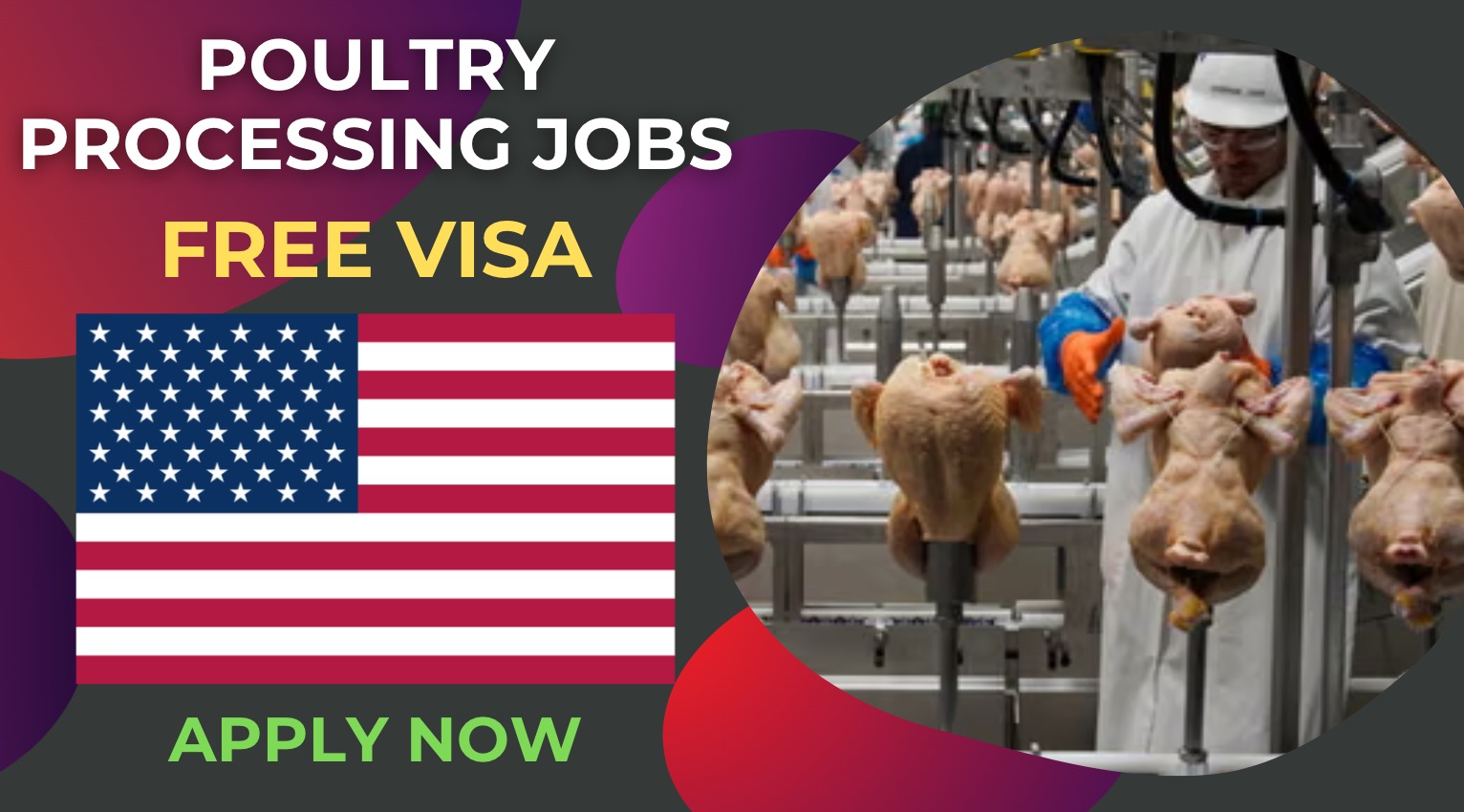
Understanding the Visa Situation for Poultry Processing Jobs
The H-2B Visa: Your Primary Pathway
The H-2B visa is a temporary, non-immigrant work visa that allows U.S. employers to hire foreign nationals for seasonal or temporary non-agricultural jobs when qualified American workers are not available . Poultry processing positions typically fall under this category, especially in facilities with seasonal production peaks.
Key characteristics of the H-2B visa:
-
The visa is tied to a specific employer and specific job location
-
Duration matches the seasonal need (typically up to 10 months)
-
You must intend to return home after the temporary period
-
Your employer must prove no U.S. workers are available
H-2B Visa Availability for 2026
For fiscal year 2026, the U.S. government has authorized up to 64,716 supplemental H-2B visas on top of the standard annual cap of 66,000 . This brings the total available to approximately 130,000 visas for the year—one of the largest allocations in recent years.
The supplemental visas are distributed in three allocations based on employers’ start dates of need, with the temporary final rule effective January 30 through September 30, 2026 . USCIS will not accept petitions under the supplemental cap after September 15, 2026 .
The Critical Difference: Farm Work vs. Processing Plant Work
It is essential to understand that poultry processing jobs are different from poultry farm work. Processing plants are industrial facilities where birds are slaughtered, cut, packaged, and prepared for distribution. These jobs fall under non-agricultural (H-2B) visas, while farm work (raising live birds) may fall under agricultural (H-2A) visas .
Real Job Opportunities in Poultry Processing
Here are actual poultry processing positions currently available at major U.S. companies. Please note that some listings specify they do not offer visa sponsorship, while others may be open to overseas workers through proper channels.
Perdue Farms – Georgetown, Delaware
| Detail | Information |
|---|---|
| Employer | Perdue Farms |
| Location | Georgetown, Delaware |
| Job Title | Production Associate |
| Shift Options | Day shift (5am-2pm), Day shift (7:30am-5pm), Night shift (2pm-11pm), Night shift (5pm-3am), Third shift shipping (10pm-7am) |
| Experience Required | Minimum 6 months of consecutive work history with one employer within the past 2 years in a comparable field |
| Physical Requirements | Lift 40-60 pounds; stand for several hours; exposure to temperatures from 28°F to 100°F; wet/moist floors; exposure to dust, feathers, and chemicals |
| Visa Sponsorship | Not specified in listing |
Job Duties:
-
Work at various stations along the production line processing poultry products
-
Work with live poultry, raw and/or cooked products
-
Areas include live hang, cut rehang, cut up, wings, leg debone, thigh debone, fresh cut, and shipping
-
Adhere to all safety requirements including PPE use
-
Maintain clean and safe working environment
Application Note: This listing does not explicitly mention visa sponsorship. The position requires applicants to include their last seven years of work experience .
Cargill – Dayton, Virginia
| Detail | Information |
|---|---|
| Employer | Cargill |
| Location | Dayton, Virginia |
| Job Title | Factory Worker |
| Compensation | $18.88 – $24.67 per hour (depending on role and shift) |
| Benefits | Medical, Dental, Vision, 401(k) with match, Paid Vacation and Holidays, Tuition Reimbursement |
| Visa Sponsorship | ❌ Must be eligible to work in the United States without visa sponsorship |
Job Duties:
-
Lift and handle whole birds
-
Weigh, label, bag, pack, and box finished product
-
Ensure food safety and quality
-
Maintain cleanliness and housekeeping
Requirements:
-
Must be 18 years or older
-
Must be eligible to work in U.S. without visa sponsorship
-
Previous poultry, meat processing, or production experience preferred
-
Work history in the last 12 months preferred
Important Note: This position explicitly states it does not offer visa sponsorship .
Job Duties in Poultry Processing Plants
Based on industry job descriptions, poultry processing workers typically perform the following tasks :
Production Line Work
-
Work at various stations along the processing line
-
Handle live poultry, raw products, or cooked products
-
Specific areas include live hang, cut rehang, cut up, wing processing, leg deboning, thigh deboning, fresh cut, and shipping
-
Weigh, label, bag, pack, and box finished products
Safety and Quality
-
Adhere to all safety requirements including wearing Personal Protective Equipment (PPE)
-
Prevent and report unsafe acts and conditions
-
Follow Lockout-Tagout procedures and Process Safety Management protocols
-
Ensure food safety and quality standards are met
-
Participate in company and department safety programs
Facility Maintenance
-
Maintain clean and safe working environment
-
Perform cleanliness and housekeeping duties
-
Report any issues to supervisors
Salary Expectations for Poultry Processing Jobs
Hourly and Monthly Wages
| Company | Location | Hourly Wage | Monthly Estimate (40 hrs/week) |
|---|---|---|---|
| Cargill | Dayton, VA | $18.88 – $24.67 | $3,272 – $4,276 |
| Industry Average (General) | Various | $12 – $20 | $2,080 – $3,467 |
Note: Cargill’s range reflects pay based on role and shift differential . Entry-level positions typically start at the lower end of the range.
Additional Compensation
-
Overtime pay: 1.5× regular rate for hours over 40 per week (common during peak production)
-
Shift differentials: Higher pay for night shifts and weekend work
-
Benefits packages: Many large employers offer comprehensive benefits including medical, dental, vision insurance, 401(k) with company match, paid vacation and holidays, tuition reimbursement
Factors Affecting Pay
-
Geographic location (wages tend to be higher in areas with higher cost of living)
-
Shift worked (night shifts typically pay more)
-
Experience level and specific role
-
Company size and union representation
Physical Requirements and Working Conditions
Poultry processing work is physically demanding. Based on job listings, workers must be prepared for :
Physical Demands
-
Lift 40-60 pounds repeatedly throughout shift
-
Stand for several hours at a time
-
Perform repetitive tasks with hands and arms
-
Reach, bend, stoop, and kneel as needed
Environmental Conditions
-
Exposure to wet and moist floors (metal and plastic grating surfaces)
-
Temperatures ranging from 28°F to 100°F
-
Ambient conditions with up to 100% humidity
-
Handle product at 25°F to 50°F
-
Noise levels from 50 db to 110 db
-
Exposure to dust, feathers, and chemicals used in poultry processing
-
Occasional exposure to carbon dioxide vapors (10ppm) and chlorine (less than 20 ppm)
-
Work with live poultry, raw products, and/or cooked products
Required Equipment
-
Must wear Personal Protective Equipment (PPE) as directed by the company
-
Safety gear typically includes hard hats, safety glasses, gloves, steel-toed boots, hearing protection, and sometimes aprons or smocks
Eligibility Requirements for Poultry Processing Jobs
Basic Qualifications
-
Age: Minimum 18 years
-
Education: High school diploma or equivalent preferred but not required
-
Experience: Some positions require 6 months of consecutive work history with one employer within the past 2 years in a comparable field ; poultry or meat processing experience preferred
-
Language: Must be able to understand instructions and safety rules
-
Physical fitness: Must meet the physical requirements outlined above
-
Background check: Pre-employment background checks are standard
-
Drug screening: Drug and alcohol testing typically required post-offer
Work Authorization Requirements
Critical Note: Many major employers explicitly state they require candidates to already have U.S. work authorization. For example, Cargill’s listing clearly states: “Must be eligible to work in the United States without visa sponsorship” .
This means that while poultry processing jobs exist, not all employers are willing or able to sponsor visas. Overseas workers must target employers who participate in the H-2B program and have obtained certification to hire foreign workers.
The H-2B Sponsorship Process: Step by Step
Phase 1: Employer Actions (Required Before You Apply)
Before you can apply, your prospective employer must complete several steps with U.S. government agencies :
Step 1: Determine Need and Timing
Employers must plan at least 6 months ahead, identifying their start date of need and whether it falls under seasonal, peak-load, or one-time occurrence categories.
Step 2: File Job Order with State Workforce Agency
Employers must create a job order with the State Workforce Agency (SWA) in the state where work will be performed. This job order remains on hold until federal approval is received .
Step 3: Submit H-2B Application to Department of Labor
Employers file Form ETA-9142B with appendices via the FLAG system 90-75 days before the date of need .
Step 4: Recruitment of U.S. Workers
Once the application is accepted, the SWA opens the job order for recruitment. The employer must document all U.S. worker applications and demonstrate that no qualified American workers are available .
Step 5: File I-129 Petition with USCIS
After receiving labor certification from DOL, the employer files Form I-129 with U.S. Citizenship and Immigration Services. This step occurs after DOL approval and before the visa cap is reached .
Phase 2: Your Actions (After Employer Approval)
Step 6: Receive Job Offer and Petition Approval
Your employer sends you:
-
Approved Form I-129 (Notice of Action)
-
Employment contract
-
Visa application instructions
Step 7: Complete DS-160 Online Application
Fill out the Online Nonimmigrant Visa Application and print the confirmation page with barcode.
Step 8: Schedule and Attend Visa Interview
Book an appointment at the U.S. Embassy or Consulate in your home country. Bring:
-
Valid passport (minimum 6 months validity beyond intended stay)
-
DS-160 confirmation page
-
Approved I-129 petition copy
-
Employment contract
-
Two passport-size photographs
-
Visa fee payment receipt (currently $205)
-
Evidence of ties to home country (family, property, etc.)
Step 9: Visa Issuance and Travel
If approved, the visa is placed in your passport. You may travel to the U.S. up to 10 days before your employment start date.
Step 10: Arrival and Work
At the U.S. port of entry, CBP officers will admit you in H-2B status. You must work only for the sponsoring employer and perform only the approved duties.
Total Timeline
The entire process—from employer application to your arrival—typically takes 3-6 months .
Important Rules and Worker Rights
Who Pays What?
Employer must pay:
-
I-129 petition fees
-
Recruitment and advertising costs
-
Fraud prevention fee
-
Visa integrity fee
-
Transportation to the U.S. (reimbursed after worker completes 50% of contract)
-
Return transportation (if worker completes contract or is terminated early)
Worker may pay:
-
Visa application fee at embassy ($205)
-
Travel to embassy for interview
-
Passport photos and related expenses
CRITICAL RULE: You cannot be charged any recruitment or placement fee by an employer, agent, or recruiter. This is illegal and grounds for petition revocation. If anyone asks you for money to secure a job or visa, it is a scam .
Your Rights as an H-2B Worker
-
You must be paid at least the promised wage meeting or exceeding prevailing wage
-
Overtime pay (typically 1.5×) for hours over 40 per week where applicable
-
Safe working environment with required safety equipment
-
Cannot be punished for reporting violations
-
You have the right to keep your own passport
-
Must receive itemized pay statements
-
Employer guarantees at least three-fourths of workdays in each 12-week period
How to Find Legitimate Poultry Processing Jobs with Visa Sponsorship
Use Official Government Resources
Department of Labor Foreign Labor Certification Website
The official DOL website (dol.gov/agencies/eta/foreign-labor) provides comprehensive information about H-2B program requirements, filing timelines, and announcements .
H-2B Foreign Labor Recruiter List
OFLC publishes an updated list of the names and locations of foreign labor recruiters used by certified employers. This list is available on the DOL website and provides greater transparency for the H-2B worker recruitment process .
Target States with High Poultry Industry Demand
The poultry processing industry is concentrated in specific regions :
Southeastern States:
-
Georgia
-
Alabama
-
Arkansas
-
North Carolina
-
Mississippi
Midwestern States:
-
Iowa
-
Missouri
-
Indiana
-
Minnesota
Other States:
-
Pennsylvania
-
Texas
-
California
-
Delaware (Perdue location)
-
Virginia (Cargill location)
Major Poultry Processing Employers
Target these large companies that have the infrastructure to sponsor foreign workers:
-
Tyson Foods – One of the world’s largest protein producers
-
Pilgrim’s Pride (owned by JBS USA) – The largest poultry company in North America
-
Perdue Farms – Fourth-generation, family-owned food and agricultural business
-
Cargill – Global food corporation with protein and salt business
-
Wayne Farms – Major poultry producer
-
Koch Foods – Large poultry processor
Search Terms to Use
Try these keywords when searching online job portals:
-
“Poultry processing H-2B”
-
“Production associate visa sponsorship”
-
“Meat processing foreign worker”
-
“H-2B poultry jobs”
-
“Food production visa sponsorship”
Work with Licensed Recruiters
The Department of Labor’s H-2B Foreign Labor Recruiter List is your most reliable resource for finding vetted recruiters . Only work with recruiters whose names appear on official lists.
Verify Employers Through Official Channels
-
Check if the employer is listed on DOL’s certified employer databases
-
Verify through state workforce agency websites
-
Look for company information on official career pages
Red Flags and Warnings
Scams to Avoid
-
Requests for payment: Never pay for job offers or visa processing. Legitimate employers cover petition costs and may reimburse visa fees after you start work.
-
Guaranteed visa promises: No one can guarantee visa approval—U.S. immigration authorities make the final decision.
-
Vague job descriptions: Legitimate offers clearly state duties, wages, employer details, and location.
-
Pressure to pay quickly: Scammers create false urgency.
-
Communication only through personal email: Legitimate employers use company domains.
-
Fake “sponsorship” promises: Be skeptical of any offer claiming visa sponsorship without requiring qualifications or proper procedures.
How to Verify Employers
-
Check if the job is listed on official government portals
-
Verify employer information through state workforce agencies
-
Research the company’s reputation and history
-
Look for the employer on DOL’s certified recruiter lists
-
Contact the company directly through official channels to verify the job exists
Understanding Job Listings
The Cargill listing in Dayton, Virginia, explicitly states: “Must be eligible to work in the United States without visa sponsorship” . This is a common requirement for direct-hire positions not part of the H-2B program. If you see similar language, that job is not open to overseas applicants without existing work authorization.
The Perdue Farms listing does not specify visa sponsorship either way . For such positions, overseas workers would need to confirm directly with the employer whether H-2B sponsorship is available.
Step-by-Step Summary: Your Action Plan
Phase 1: Preparation (Now)
-
Assess your eligibility – Do you meet physical requirements? Can you obtain a passport?
-
Gain relevant experience – Poultry or meat processing experience is preferred by many employers
-
Prepare documents – Valid passport, educational certificates, work references
-
Learn basic English – Communication skills are essential for workplace safety
-
Save money – For passport fees, visa application costs, and initial expenses
Phase 2: Research Target Employers
-
Identify major poultry processors – Tyson, Pilgrim’s Pride, Perdue, Cargill, Wayne Farms
-
Research states with high demand – Georgia, Alabama, Arkansas, North Carolina, Delaware
-
Check DOL’s H-2B Foreign Labor Recruiter List – Find vetted recruiters
-
Bookmark official company career pages – Monitor for openings mentioning visa sponsorship
Phase 3: Job Search (3-6 Months Before Target Season)
-
Search using specific keywords – “H-2B poultry,” “production associate visa sponsorship”
-
Apply through official channels only – Company portals, licensed recruiters
-
Never pay for job applications
-
Keep records – Document where and when you applied
-
Be patient – The H-2B process takes time
Phase 4: Interview and Job Offer
-
Participate in interviews (phone or video)
-
Review contract carefully – Confirm wages, duration, work location, visa sponsorship terms
-
Understand that employer must file H-2B petition first – You cannot apply without approved petition
-
Ask about reimbursement – Will employer reimburse visa fees and provide transportation?
Phase 5: Visa Processing
-
Employer files USCIS petition and receives approval
-
Complete DS-160 online application
-
Schedule embassy interview in your home country
-
Attend interview with all required documents
-
Receive visa and travel within validity period
Phase 6: Work and Return
-
Start job with sponsoring employer
-
Keep records – Pay stubs, employment documents, copies of all contracts
-
Track hours – Ensure you’re paid correctly (including overtime)
-
Complete contract – You are expected to return home after
-
Receive return transportation as required by law upon contract completion
Final Honest Summary
| Question | Answer |
|---|---|
| Are poultry processing jobs with visa sponsorship real? | ✅ Yes, but you must target employers participating in the H-2B program. Major companies like Cargill explicitly state they do not offer sponsorship for some positions, while others may participate. |
| What visa is used? | ✅ H-2B visa for temporary non-agricultural workers . |
| What salary can I expect? | 💰 $12–$25 per hour depending on location, shift, and employer. Cargill offers $18.88–$24.67 per hour . |
| Is accommodation provided? | ⚠️ Some employers may provide housing or housing allowances, but this is not universal. The H-2B program has specific housing requirements. |
| Do I need experience? | ⚠️ Some positions require 6 months of relevant work history ; others prefer but do not require experience . |
| What are the physical requirements? | ✅ Lift 40-60 pounds, stand for long periods, work in temperature extremes, tolerate exposure to dust and feathers . |
| Do I need to speak English? | ✅ Basic English is required for workplace safety and instructions. |
| How long can I work? | ⏱️ Seasonal positions typically last up to 10 months. Maximum H-2B stay is 3 years total. |
| Is there a path to permanent residency? | ❌ No, H-2B is strictly temporary with no direct green card pathway. |
| Is this pathway realistic? | ✅ Yes, for workers who meet physical requirements, connect with legitimate employers through official channels, and follow proper procedures. However, competition is high, and the process takes time. |
Poultry Processing Jobs in the USA for Overseas Workers: Poultry processing jobs in the USA with visa sponsorship offer a genuine opportunity for overseas workers willing to perform physically demanding work in America’s food production industry. The H-2B program provides a legal, structured pathway with verified employers, and for fiscal year 2026, the U.S. government has authorized up to 64,716 supplemental visas, making this one of the largest allocations in years .
However, success requires understanding that not all poultry processing jobs offer sponsorship. Major employers like Cargill explicitly state they require existing U.S. work authorization for some positions . You must target employers who participate in the H-2B program and have obtained certification to hire foreign workers.
Your success depends on:
-
Finding legitimate employers through official DOL channels
-
Meeting physical requirements (lift 50+ pounds, stand for long periods)
-
Having relevant experience (6 months preferred)
-
Being patient through the 3-6 month visa process
-
Being vigilant against scams (never pay for job offers)
Start your search now through official government resources, target states with high poultry industry concentration like Georgia, Alabama, and Arkansas , and focus on major employers like Tyson, Pilgrim’s Pride, and Perdue. With proper preparation and persistence, poultry processing can be your pathway to legal work in the United States.
Disclaimer
This job information is shared for educational and informational purposes only.
Any discussion of visa categories is based on general immigration laws and publicly available information