
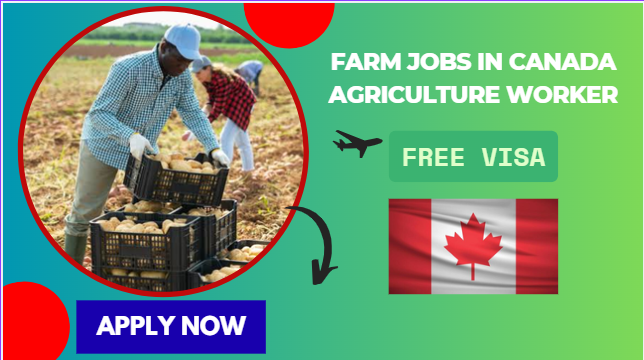
Farm Jobs in Canada Agriculture Worker: Canada’s agriculture industry offers a wide range of employment opportunities for people interested in farm jobs, agricultural labor, greenhouse work, livestock care, harvesting, and machinery operation.
Farm Jobs in Canada Agriculture Worker
These jobs can be seasonal or longer-term, depending on the employer, occupation, and immigration route. For foreign workers, Canada also has established programs that allow eligible employers to hire workers when qualified Canadians and permanent residents are not available.
The size of the industry is significant. Statistics Canada reported 280,991 employees in Canada’s agriculture sector in 2024, with seasonal workers making up 48.6% of agricultural employment. Ontario had the largest number of agricultural employees, followed by Quebec.
If you are searching for farm jobs in Canada, understanding the different job types, requirements, wages, work permits, and application process can save you from wasting time on unreliable advertisements. This guide explains what you need to know before applying.
Why Farm Jobs in Canada Are Popular
Canadian farms produce fruits, vegetables, grains, livestock, dairy products, greenhouse crops, nursery plants, and many other agricultural products. Because much of this work depends on planting and harvesting seasons, employers often need additional workers during busy periods. The work can be physically demanding, but it may provide practical experience for people who want to build a career in agriculture.
The agriculture industry also has opportunities beyond traditional outdoor farm labour. Depending on your experience, you may find positions involving tractors, agricultural machinery, greenhouse production, livestock care, irrigation, crop maintenance, packing, and farm supervision. Canada’s official agricultural employment resources specifically direct job seekers toward farm and agri-food employment opportunities.
Demand for Agricultural Workers
Agricultural labour remains an important part of Canada’s food system. In 2024, nearly 75,000 temporary foreign workers were employed in primary agriculture, according to Agriculture and Agri-Food Canada. Ontario, Quebec, and British Columbia accounted for the largest numbers of these workers.
That does not mean every applicant will automatically receive a job or work permit. Employers must follow Canadian recruitment and immigration requirements, and workers must meet the applicable eligibility conditions.
Types of Farm Jobs Available in Canada
Farm employment covers much more than picking fruits. The right position depends on the farm’s production, your experience, and the season.
Fruit and Vegetable Farm Jobs
Fruit and vegetable farms may hire workers for planting, weeding, thinning, pruning, harvesting, sorting, grading, and packing. Common positions can include harvesting labourer, crop farm labourer, greenhouse worker, vegetable farm worker, and nursery labourer.
Some jobs involve repetitive physical work and long periods outdoors, particularly during harvest season. Workers should be prepared for changing weather conditions and physically active working days.
Livestock and Dairy Farm Jobs
Livestock farms may employ workers to feed animals, clean facilities, monitor animal health, maintain equipment, and perform general farm duties. Dairy farms can involve milking, feeding calves, cleaning barns, and maintaining a safe working environment.
Canada’s agricultural employment classifications include livestock labourers and specialized livestock workers and farm machinery operators. These occupations are also included among agricultural occupations that can receive priority processing under certain current immigration procedures.
Seasonal Farm Work in Canada
Many Canadian farm positions are seasonal jobs, especially in fruit, vegetable, nursery, and greenhouse production. Seasonal employment can be attractive to workers who want temporary Canadian work experience, but applicants should carefully check the exact contract dates before accepting an offer.
The Seasonal Agricultural Worker Program, commonly called SAWP, allows eligible Canadian employers to hire workers from Mexico and participating Caribbean countries for agricultural work. Under the program, employment can be for a maximum of eight months between January 1 and December 15, subject to program requirements.
Workers from countries outside the SAWP participating countries may have other agricultural work-permit options, depending on the employer and position.
Farm Jobs for Foreign Workers
Canada has several pathways through which agricultural employers can hire temporary foreign workers. The Agricultural Stream is one important option and allows eligible employers to hire workers from any country when the required conditions are met.
The production must generally fall within specified commodity sectors and involve on-farm primary agriculture.
The Canadian government also distinguishes between the SAWP, Agricultural Stream, high-wage positions, and low-wage positions within its primary agriculture framework.
Temporary Foreign Worker Options
Foreign workers should not assume that an advertisement saying “visa sponsorship” guarantees immigration approval. A legitimate process normally involves an eligible employer, appropriate recruitment requirements, and immigration documentation.
The Government of Canada recommends using the Job Bank for Temporary Foreign Workers to search for Canadian employers seeking foreign workers. Job advertisements can indicate whether an employer has applied for or received a positive LMIA.
Requirements for Canadian Farm Jobs
Requirements vary from one position to another. Entry-level farm labour jobs may not require advanced education, while machinery operator, supervisor, livestock, or technical positions can require previous experience or specific skills.
Applicants should carefully read the job advertisement and check requirements for work experience, physical ability, education, language skills, driver’s license, machinery experience, and availability. Some employers may provide workplace training, while others prefer workers who already understand agricultural tasks.
Skills Employers Look For
Successful farm workers are usually dependable, physically capable, safety-conscious, and willing to work as part of a team. Experience with tractors, irrigation systems, animal care, harvesting tools, greenhouse equipment, or crop maintenance can make an application stronger.
Good attendance is particularly important during harvest periods. Agriculture operates around weather and crop conditions, so employers often need workers who can adapt quickly when schedules change.
Farm Worker Wages in Canada
Wages vary according to occupation, province, experience, employer, and type of work. As one current reference, Canada’s Job Bank lists crop farm laborer–harvesting wages nationally at approximately $16.00 per hour at the low end, $18.00 median, and $25.00 at the high end in its latest published wage data. Regional wages can differ substantially.
Applicants should always check the wage stated in the actual job advertisement and employment contract rather than relying on a general salary estimate.
Provinces With Farm Job Opportunities
Agricultural employment exists across Canada, but opportunities vary by commodity and region. Ontario, Quebec, British Columbia, Alberta, Manitoba, and Saskatchewan all have important agricultural industries.
Ontario, Quebec and British Columbia
Ontario employed 83,363 agricultural workers in 2024, the highest number among Canadian provinces, while Quebec employed 69,717. British Columbia had 30,905 agricultural employees.
For temporary foreign workers in primary agriculture, Ontario also recorded the highest number in 2024, followed by Quebec and British Columbia.
How to Find Legitimate Farm Jobs
The safest approach is to search through established employment resources and verify the employer before sending documents or paying anyone. Canada’s official agriculture employment resources point job seekers toward Job Bank and other recognized agricultural employment websites.
Be particularly cautious when an unknown person promises a Canadian farm job, work permit, airfare, or guaranteed visa in exchange for a large upfront payment. A genuine job opportunity should provide clear information about the employer, location, duties, wage, employment terms, and application process.
Work Permits and Immigration
Foreign nationals generally need the appropriate authorization to work in Canada. Agricultural workers may use different processes depending on whether they are participating in SAWP or another agricultural employment stream.
For many agricultural workers outside SAWP, Canada uses an employer-specific work permit, meaning the worker is generally authorized to work for the employer named on the permit.
A job offer alone does not automatically give someone permission to work in Canada. Applicants should follow the official immigration instructions applicable to their specific situation.
Employee Rights and Housing
Temporary foreign workers in Canada have legal protections. Employers must follow applicable rules concerning wages, working conditions, health and safety, and housing.
Housing requirements can vary by agricultural stream. For example, the Government of Canada states that workers in the SAWP must generally receive adequate and suitable housing at no cost, subject to specific British Columbia rules. Other agricultural workers have different housing arrangements and permitted deductions.
If something seems wrong with your employment conditions or housing, use official Canadian government resources to understand your rights and reporting options.
Tips for Applying Successfully
A simple, accurate resume can make a major difference. Mention any previous experience with farming, harvesting, livestock, greenhouses, tractors, machinery, landscaping, construction, or physically demanding outdoor work.
When applying, make sure your contact details are correct and describe your experience honestly. If you have photographs, certificates, machinery licences, or references that are relevant to the position, keep them organized so you can provide them when requested.
Common Mistakes to Avoid
One of the biggest mistakes is believing every online advertisement that promises a Canada farm job with guaranteed visa sponsorship. Another is paying an unofficial agent before independently verifying the employer and job.
Applicants should also avoid submitting false information on applications. Immigration and employment documents should always contain accurate details. Finally, read the employment contract carefully before accepting an offer, particularly the wage, working hours, accommodation arrangements, deductions, job location, and contract duration.
Conclusion
Farm jobs in Canada can provide opportunities in crop production, fruit and vegetable harvesting, greenhouse operations, livestock care, dairy farming, machinery operation, and other agricultural activities. The industry continues to employ hundreds of thousands of workers, including a substantial temporary foreign workforce.
For foreign applicants, the most important step is to understand the difference between a real Canadian employment opportunity and an unofficial promise of a guaranteed visa. Use reliable job-search resources, verify employers, understand the applicable work-permit process, and review the employment contract carefully before making any commitment.
With the right skills, realistic expectations, and a legitimate employer, agricultural work can be a useful way to gain Canadian work experience and explore opportunities in the country’s large agriculture and agri-food sector.
FAQs
1. Can foreigners apply for farm jobs in Canada?
Yes. Canada has programs that allow eligible agricultural employers to hire temporary foreign workers when the applicable requirements are satisfied. The exact process depends on the worker’s country, occupation, employer, and immigration pathway.
2. How much can a farm worker earn in Canada?
Wages depend on the job and location. For example, Job Bank currently lists national wages for crop farm labourers involved in harvesting at approximately $16 low, $18 median, and $25 high per hour.
3. Which provinces have the most agricultural jobs?
Ontario, Quebec, and British Columbia are among the major agricultural employment locations. Ontario had the largest agricultural workforce in 2024.
4. Do Canadian farm jobs always include free accommodation?
No. Housing arrangements depend on the employment program and position. Specific rules apply to different categories of temporary foreign agricultural workers, so applicants should check the employment contract and official government requirements.
5. Where can I search for Canadian farm jobs?
The Government of Canada recommends using the Job Bank for Temporary Foreign Workers and other recognized agricultural employment resources when searching for opportunities.