

Machine Operator Helper Jobs in the USA with Work Visa: The dream of working in America is one that many Indians share. The good news is that machine operator helper jobs can be a realistic pathway, especially if you understand the right visa options and know where to look. This guide will walk you through everything you need to know about securing a machine operator helper position in the USA with a work visa.
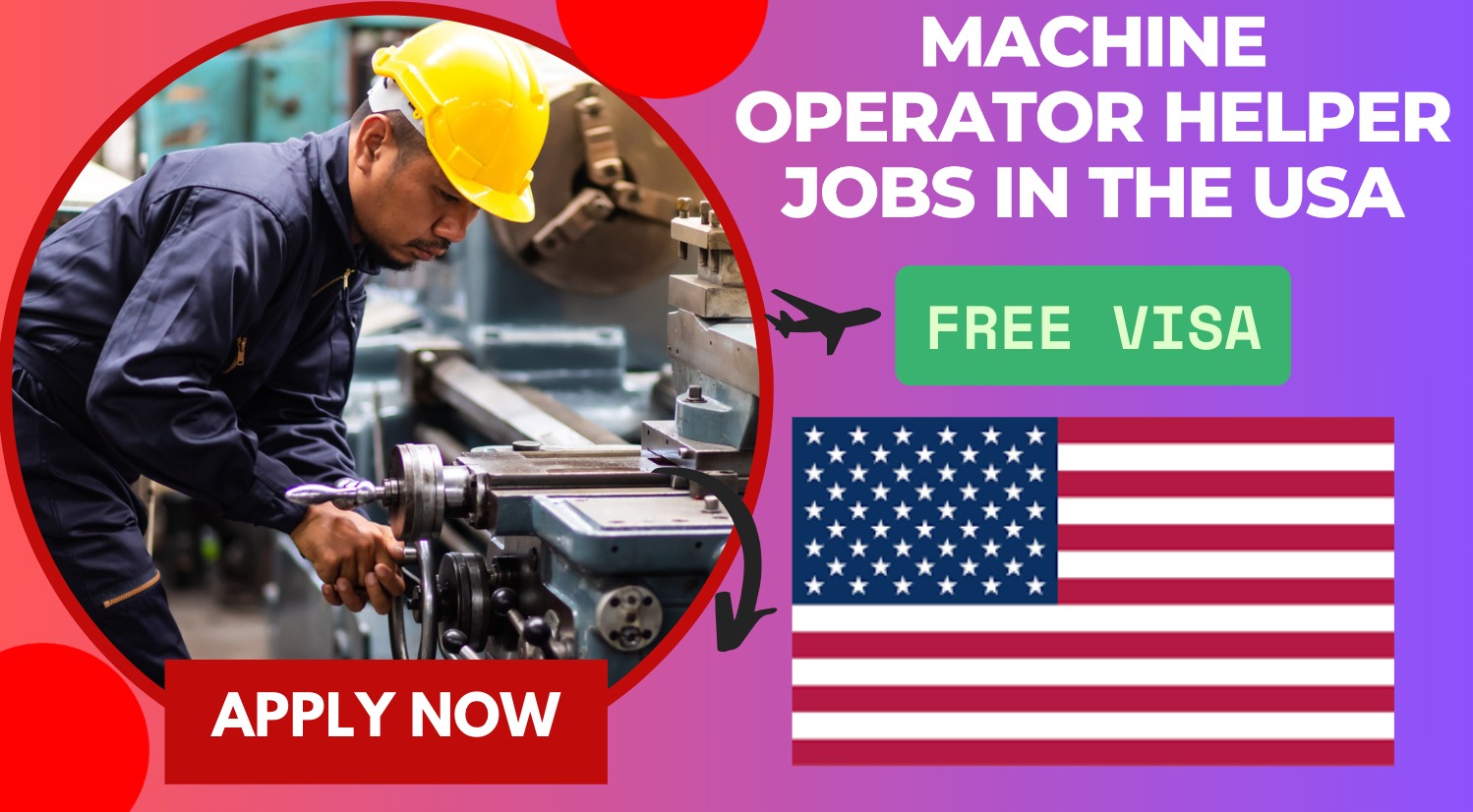
What Exactly is a Machine Operator Helper?
Before we dive into the visa process, let us understand what this job actually involves. A machine operator helper is an entry-level position in manufacturing and production industries. You work alongside experienced machine operators, assisting them in running machinery, loading and unloading materials, maintaining equipment, and ensuring smooth production flow.
Think of it as a learning role where you gain hands-on experience while earning a paycheck. Many successful machine operators started their careers as helpers, learning the trade from the ground up.
The job typically involves tasks like feeding materials into machines, removing finished products, cleaning equipment, performing basic quality checks, and helping with machine setup and changeovers. It requires physical stamina, attention to detail, and a willingness to learn.
Current Salary Expectations
Let’s talk about money. According to recent data, machine operator helpers in the USA earn an average hourly wage of around $16.93 . The pay range typically falls between $14 to $21 per hour, depending on your experience, location, and the specific employer.
Here’s a quick breakdown of what you can expect:
Entry-level with less than 1 year experience: around $14.09 per hour
Early career with 1-4 years experience: around $14.92 per hour
Experienced helpers: can earn up to $21 per hour or more
Some employers also offer overtime opportunities, bonuses, and profit-sharing. For example, a production helper position in Florida was recently advertised at $18.52 to $22.00 per hour with overtime possible . Another machine assistant operator position in Pennsylvania offered $26.43 per hour .
So overall, you can expect an annual salary between $29,000 to $44,000 for this role.
Visa Options for Machine Operator Helpers
Now, this is the most important section. Working in the USA requires proper authorization, and there are specific visa categories that may work for machine operator helper positions.
H-2B Visa: The Most Common Pathway
The H-2B visa is a non-immigrant visa that allows foreign workers to come to the USA for temporary non-agricultural work. This is often the most relevant visa for machine operator helper positions.
Key things to know about the H-2B visa:
It is for temporary or seasonal work
The employer must prove there are not enough US workers available for the job
The job must be for a one-time occurrence, seasonal need, or peak load need
You can stay for the period specified in your petition, typically up to one year initially
Many manufacturing companies use the H-2B program to fill helper and assistant positions. A recent job posting in Jasper, Florida specifically mentioned that the Helper-Production Worker position required an H-2B visa .
B-1 Visa for Specialized Workers
There is also a possibility under the B-1 visa category, but this is more limited. The B-1 visa may be granted to specialized workers going to the USA to install, service, or repair commercial or industrial equipment purchased from a company outside the United States .
To qualify for a B-1 visa for this purpose:
The equipment must have been purchased from a company outside the USA
The contract must specifically require the seller to provide installation or repair services
You must possess specialized knowledge essential to perform the work
You cannot receive payment from a US source
This visa is less common for regular helper positions and more suited for specialized technicians sent by foreign equipment manufacturers.
The Challenge: Green Card and Permanent Residency
For permanent machine operator helper jobs, the path is more difficult. Many US employers hiring for regular, ongoing machine operator positions require candidates to already have work authorization. For instance, Collins Aerospace explicitly states for their Machine Operator I positions that the job requires a “U.S. Person” which means US citizens, permanent residents, asylees, or refugees .
Similarly, Novolex’s job posting for a Machine Operator Assistant requires applicants to be “eligible to work in the United States” .
This means that for most standard machine operator helper jobs, the employer is not willing to sponsor a visa. You either already have work authorization, or you apply through temporary visa programs like H-2B.
Finding Employers Who Sponsor Visas
The key to success is finding employers who participate in the H-2B program or are willing to sponsor international workers. Here are some practical tips:
Look for H-2B Job Postings
Websites like El Portal Migrante specifically list jobs that are available with visa sponsorship. When searching, use terms like “H-2B,” “visa sponsorship,” or “temporary work” along with “machine operator helper” or “production helper” .
Target Industries That Use H-2B
Industries that commonly use H-2B workers include:
Manufacturing and production facilities
Packaging companies
Food processing plants
Construction and maintenance services
Hospitality and landscaping (though less relevant for machine operator roles)
Connect with Staffing Agencies
Some staffing agencies specialize in placing temporary workers, including international candidates. Aerotek, for example, frequently hires machine operators and helpers, though their positions may require existing work authorization .
Job Requirements You Need to Meet
To be competitive for these positions, you should understand what employers are looking for.
Basic Qualifications
Most machine operator helper positions require:
High school diploma or equivalent (GED)
Ability to lift 45-65 pounds regularly
Physical stamina for standing, walking, and performing repetitive tasks
Basic English communication skills
Willingness to work overtime and weekends when needed
Preferred Skills
Having these skills will make you stand out:
Previous manufacturing or production experience
Basic mechanical aptitude
Understanding of safety procedures
Ability to read and interpret basic instructions
Teamwork and communication skills
Some positions, like those in aerospace manufacturing, may also require basic math skills and familiarity with precision measuring tools like micrometers and calipers .
Step-by-Step Guide to Applying
Here is a practical roadmap to help you navigate this process:
Step 1: Research Employers
Start by identifying companies that have historically sponsored H-2B visas. Look for manufacturing companies, packaging firms, and production facilities. Use job boards and filter by “visa sponsorship.”
Step 2: Prepare Your Documents
Have these ready before you start applying:
Updated resume highlighting any manufacturing or mechanical experience
Educational certificates (especially high school diploma or equivalent)
Any trade certifications or training documents
Valid passport
Step 3: Find a Job Offer
You cannot apply for a work visa on your own. The employer must first file a petition on your behalf. Your focus should be on getting a job offer from an employer willing to sponsor you.
Step 4: Employer Files H-2B Petition
Once you receive a job offer, your employer will file Form I-129 with US Citizenship and Immigration Services (USCIS). This is the petition for a non-immigrant worker.
Step 5: Visa Application and Interview
After the petition is approved, you will need to apply for the visa at the US Embassy or Consulate in India. You will need to attend an interview and provide supporting documents.
Step 6: Travel to the USA
Once your visa is approved, you can travel to the USA and begin work for the specified period.
Challenges You Should Know About
Let’s be honest about the challenges you may face:
Limited Sponsorship Opportunities
Many machine operator helper positions are filled by local workers. Finding an employer willing to sponsor a visa requires patience and persistence.
Temporary Nature of H-2B Visas
H-2B visas are temporary. You cannot stay permanently unless you transition to another visa category. The employment period is specified in the petition.
Competition
These positions can attract many applicants, both domestic and international. Having relevant experience or skills gives you an advantage.
Legal Compliance
The process involves multiple government agencies and strict deadlines. Working with an employer who understands the H-2B process is crucial.
Is This Path Right for You?
Working as a machine operator helper in the USA can be a great opportunity if:
You are willing to start at an entry level
You have physical stamina and enjoy hands-on work
You are open to temporary assignments
You want to gain US work experience
You are patient with the visa process
It may not be the right fit if:
You are looking for permanent residency immediately
You prefer desk jobs or administrative roles
You are not willing to work flexible hours including weekends
Final Thoughts
Machine Operator Helper Jobs in the USA with Work Visa: Machine operator helper jobs in the USA with work visas are possible, particularly through the H-2B temporary worker program. While the path requires effort, research, and patience, many workers have successfully entered the US manufacturing industry through these roles.
Start by researching employers, prepare your documents, and focus on finding a company willing to sponsor you. The pay is decent, the experience is valuable, and for many, it opens doors to longer-term opportunities in the US manufacturing sector.
Remember that immigration laws and visa availability can change. Always refer to official US government sources like the Department of State and USCIS for the most current information. Good luck with your journey.
Disclaimer
This job information is shared for educational and informational purposes only.
Any discussion of visa categories is based on general immigration laws and publicly available information