

Truck Driver Jobs Abroad for Foreign Applicants: Truck driving is a globally in-demand profession, offering foreign applicants one of the most viable pathways to secure employment and a work visa abroad. Many countries face acute shortages of qualified heavy goods vehicle (HGV) or commercial driver’s license (CDL) holders, creating structured immigration channels to attract international talent. For professional drivers, this represents an opportunity for stable, well-compensated careers with clear routes to residency. This guide outlines the top destinations, licensing conversion processes, and strategic steps for success.
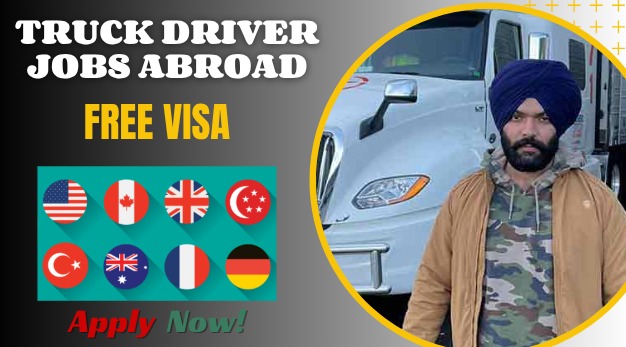
Global Demand and Key Destinations
The demand is strongest in countries with large landmasses, robust economies, and aging driver populations.
1. Canada
Why: One of the world’s most truck-dependent economies with a massive shortage. Truck Driver is a top-demand occupation.
Visa Pathways:
Express Entry: Through the Federal Skilled Trades Program (FSTP) or Provincial Nominee Programs (PNPs) like Ontario’s In-Demand Skills Stream.
Temporary Foreign Worker Program (TFWP): Direct employer sponsorship with a positive Labour Market Impact Assessment (LMIA).
Licensing: You must obtain a provincial Class 1/AZ license. The process involves knowledge and road tests. Some provinces may recognize limited experience for license exchange; otherwise, training is required.
Key Requirement: Minimum 2-3 years of documented professional experience. Clean driving and criminal records are mandatory.
2. Australia
Why: Critical shortages in regional and long-distance routes. The occupation is on several skilled occupation lists.
Visa Pathways: Temporary Skill Shortage (TSS) visa (subclass 482) and regional visas like the 494. Employer sponsorship is key.
Licensing: You must obtain a state-based Heavy Rigid (HR), Heavy Combination (HC), or Multi-Combination (MC) license. Requires passing written, practical, and medical tests. An overseas license may allow you to drive for 3 months before converting.
Key Requirement: A positive skills assessment from the relevant authority (TRA for most drivers). High English proficiency (IELTS 5.0+).
3. New Zealand
Why: Similar shortages, especially for experienced drivers. The role is on the Green List (Work to Residence).
Visa Pathway: Accredited Employer Work Visa (AEWV). With 2 years of work in NZ, you can apply for residence.
Licensing: Convert to a New Zealand Class 2, 4, or 5 license. This involves theory and practical tests. An Overseas Driver Conversion Course may be required.
Key Requirement: Job offer from an Accredited Employer, meeting median wage requirements.
4. The Gulf Cooperation Council (GCC) – UAE, Saudi Arabia, Qatar
Why: Major logistics hubs with extensive construction and port operations.
Visa Pathway: Standard employer-sponsored work visa. Large transport companies recruit internationally.
Licensing: Must obtain a local heavy vehicle license. This often requires taking lessons and tests in-country. Some countries have agreements for license conversion.
Key Requirement: Extensive experience, often with specific vehicles (e.g., tankers, tippers). A good conduct certificate is crucial.
5. Germany & Europe
Why: Shortages for international and long-haul drivers within the EU.
Visa Pathway: For non-EU drivers, the EU Blue Card is possible but requires a high salary. More common is a German Skilled Worker Visa, which recognizes professional truck driving as a formal apprenticeship (“Berufskraftfahrer”).
Licensing: Must convert to a German CE/CIE license. This is a complex, expensive process involving theory exams (in German), first-aid courses, and practical tests. B1 level German is strongly recommended.
Key Requirement: Recognized vocational training or 3-5 years of proven experience. A contract with a German logistics company.
The Universal Process: Steps to Secure a Job & Visa
Phase 1: Self-Assessment & Documentation (Start Here)
Gather Proof of Experience: Official employment letters, logbooks, tax records covering at least 2-5 years of full-time driving.
Obtain Driving History: A clean, verifiable record from your home country’s licensing authority.
Check Health: Ensure you meet the medical standards (vision, cardiovascular health) for professional drivers in your target country.
Phase 2: License Conversion Research
Contact the national or provincial road authority of your target country (e.g., ServiceOntario for Canada, NZTA for New Zealand).
Understand the exact steps: Will you need full retraining? Can you take a simplified test? Budget for this cost (can be €/$2,000-5,000+).
Phase 3: Job Search & Securing Sponsorship
Target the Right Employers: Apply to large national and international transport and logistics companies (e.g., UPS, FedEx, Toll, Mainfreight, large grocery chain distributors).
Use Specialized Agencies: Recruiters like Driver Hire, Tranznet, and logistics-focused agencies in the target country are essential gatekeepers.
Apply Strategically: On your CV, highlight experience with specific vehicle types (refrigerated, hazardous materials, oversized loads), safety awards, and mileage without incidents.
Phase 4: Visa Application & Relocation
The sponsoring employer will typically guide you through the work permit application (LMIA in Canada, sponsorship notice in AU/NZ).
Once the permit is approved, you apply for the work visa at the embassy.
Plan for the License Conversion: Many drivers enter on their visa, then immediately begin the local licensing process, which the employer may support.
Key Success Factors & Warnings
Clean Record is Non-Negotiable: Any major traffic violations or criminal history will result in visa denial.
Specialization Pays: Experience with ADR (hazardous goods), tankers, or heavy haulage makes you far more valuable.
Beware of Scams: Never pay a “consultant” a large fee for a “guaranteed” job offer. Legitimate employers and recruiters do not operate this way.
Understand the Lifestyle: Be prepared for long periods away from home, especially in countries like Canada and Australia. Research the company’s schedules and policies.
Final Summary
Truck Driver Jobs Abroad for Foreign Applicants: Truck driving is a prime skilled trade for immigration. Success depends on having extensive, documented experience and navigating the target country’s licensing system. Canada, Australia, and New Zealand offer the most structured pathways.
Your Action Plan:
Choose your primary target country based on its skilled occupation lists.
Meticulously gather your experience documents and obtain an official driving history.
Research the specific license conversion process with the official transport authority.
Begin applying to major logistics firms and specialized recruiters in that country, being transparent about your license status.
By proving your professional reliability and committing to obtaining the local license, you can secure a stable and well-paid career driving abroad. Start the documentation process now, as it can be the longest step.
Disclaimer
This job information is shared for educational and informational purposes only.
Any discussion of visa categories is based on general immigration laws and publicly available information.