
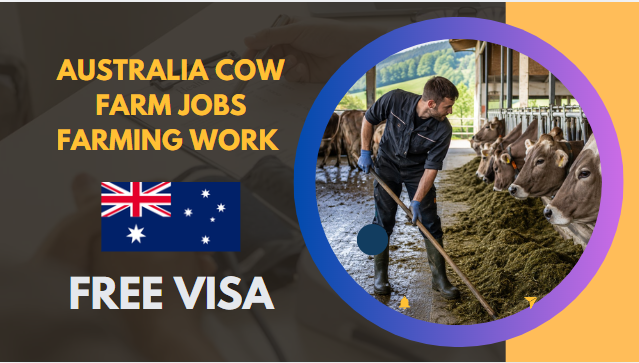
Australia Cow Farm Jobs: Australia is well known for its large agricultural industry, and cow farm jobs in Australia can be an attractive option for people who enjoy working outdoors, caring for animals, and living in regional areas. Dairy and cattle farms operate across several parts of the country
Australia Cow Farm Jobs
Creating roles ranging from general farm work and milking to livestock care, machinery operation, and experienced farm management. Current Australian government information confirms that agriculture continues to provide work opportunities for temporary visa holders, while the dairy industry has specific pathways for some skilled overseas workers.
If you are searching for Australia cow farm jobs, it is important to understand that farm employment is not one single type of job. Some positions are entry-level and focus on routine animal care, while others require practical dairy experience, machinery skills, qualifications, or supervisory ability. This guide explains the available opportunities, typical duties, skills employers look for, possible visa routes, and how to search for genuine farming work in Australia.
Why Work on a Cow Farm in Australia?
Working on an Australian cattle or dairy farm can be very different from working in a city-based job. Instead of sitting behind a desk, farm workers may spend much of their day around livestock, pastures, milking facilities, machinery, and farm equipment. The work can be physically demanding, but it can also provide practical agricultural experience and an opportunity to live in regional Australia.
Australia’s dairy farming workforce is concentrated across several major dairy regions, particularly in Victoria, South Australia, New South Wales, Queensland, Tasmania, and Western Australia. A Jobs and Skills Australia report recorded around 9,490 payroll jobs in dairy cattle farming during the 2023 peak month, showing the scale of employment within the sector. Jobs and Skills Australia
Types of Australia Cow Farm Jobs
There are several types of positions available on cattle and dairy farms. The exact duties depend on the size of the farm, the type of cattle operation, and the worker’s experience.
Dairy Farm Worker
A dairy farm worker may assist with feeding cattle, moving livestock, cleaning sheds, maintaining equipment, and supporting daily milking operations. Some workers also monitor animals and report signs of illness or injury to supervisors.
Jobs and Skills Australia describes dairy cattle farm workers as performing routine tasks such as herding and milking cattle, providing feed and water, assisting with livestock health, and cleaning milking facilities. Jobs and Skills Australia
Dairy Cattle Farm Operator
More experienced workers may operate milking equipment, record milk-related information, monitor machinery, and perform multiple farm functions. Employers may look for previous dairy experience or relevant qualifications for these positions.
The Australian Government’s Dairy Industry Labour Agreement specifically recognizes Dairy Cattle Farm Operator and Senior Dairy Cattle Farm Worker occupations for eligible employer-sponsored arrangements. Immigration and citizenship Website
Livestock Farm Worker
Livestock workers may feed animals, move cattle between paddocks, maintain fences, clean facilities, monitor animal condition, and assist with general farm operations.
The work requires patience and confidence around animals. Safety is particularly important because cattle are large and powerful animals that can behave unpredictably.
What Does a Cow Farm Worker Do?
Daily duties can change depending on the season and farm. A typical worker might start early in the morning because cattle and dairy operations often follow strict routines.
Common responsibilities can include:
- Feeding and watering cattle
- Herding livestock
- Assisting with milking
- Cleaning milking sheds
- Checking animal health
- Maintaining fences and farm areas
- Cleaning and maintaining equipment
- Loading feed and supplies
- Recording livestock or production information
- Supporting general farm maintenance
Workers with more experience may also become involved in breeding programs, pasture management, animal health programs, machinery operation, and staff supervision. These are among the responsibilities listed by Home Affairs for senior dairy farm positions. Immigration and citizenship Website
Skills Needed for Australian Cow Farm Jobs
You do not necessarily need a university degree to work on a farm, but practical skills can be extremely valuable. Dairy farming is more technical than many people realize.
Australian industry information highlights skills including animal handling, machinery, fencing, irrigation, livestock feeding, workplace safety, milk harvesting, food safety, and pasture management. Jobs and Skills Australia
For entry-level positions, employers may value reliability, physical fitness, willingness to learn, and a positive attitude. For experienced positions, they may expect previous dairy experience, machinery knowledge, livestock-handling skills, and formal qualifications.
Can Foreign Workers Get Cow Farm Jobs in Australia?
Yes, foreign workers can work in Australia’s agriculture sector when they hold a visa that provides the appropriate work rights. Australian Home Affairs states that several temporary visa categories allow eligible visa holders to work in agriculture, including Working Holiday Maker visas and the Pacific Australia Labour Mobility scheme. Immigration and citizenship Website
However, not every farm job provides visa sponsorship. This distinction is important for overseas applicants. A job advertisement saying that a farm is hiring does not automatically mean the employer can sponsor a foreign worker.
For skilled dairy positions, Australia’s Dairy Industry Labour Agreement provides specific employer-sponsored options for eligible overseas workers. These include the Skills in Demand visa (subclass 482), Employer Nomination Scheme visa (subclass 186) after the relevant transition period, and Skilled Employer Sponsored Regional visa (subclass 494). Immigration and citizenship Website
Farm Work Through Working Holiday Visas
For eligible young travelers, Working Holiday Maker programs can provide another route into agricultural employment. Australian Home Affairs states that Working Holiday visa subclass 417 and Work and Holiday visa subclass 462 holders can work in agriculture. Immigration and citizenship Website
Agricultural work can also count as specified work for eligible visa holders under the relevant rules. For example, Home Affairs includes feeding and herding cattle on a farm among examples of specified plant and animal cultivation work. Immigration and citizenship Website
Anyone relying on specified work should check the current visa rules, eligible locations, and job requirements before accepting employment.
Qualifications and Experience
Requirements depend heavily on the position. A general farm hand may be hired based primarily on practical ability and willingness to learn, while a senior dairy position can require substantially more experience.
Under the current Dairy Industry Labour Agreement, a Senior Dairy Cattle Farm Worker generally needs an Australian Qualifications Framework Certificate III or equivalent qualification plus recent relevant experience, or the required level of recent relevant work experience. Dairy Cattle Farm Operators have separate qualification and experience requirements. Immigration and citizenship Website
This means applicants should not apply for every advertised position in exactly the same way. Match your resume to your actual experience.
Where Are Cow Farm Jobs Located?
Dairy farming is spread across several Australian states. Major dairy regions are found in Victoria, Tasmania, South Australia, New South Wales, Queensland, and Western Australia. Jobs and Skills Australia
Victoria is particularly important for dairy production, while Tasmania and parts of South Australia and New South Wales also have established dairy communities. Regional employment can offer a very different lifestyle from Australia’s major cities, so applicants should consider transportation, accommodation, weather, distance from services, and the remoteness of the farm before accepting a position.
Salary and Working Conditions
Farm wages can vary according to the job, experience, employer, employment arrangement, and applicable award or agreement. It is therefore better to check the specific employment offer rather than relying on a generic online salary figure.
Workers should receive the employment rights and protections that apply to them. Australian Home Affairs states that migrant workers are covered by the same workplace laws, entitlements, and protections as Australian workers, provided they have the right to work under their visa. Immigration and citizenship Website
Before starting work, carefully review the written agreement, including hourly pay, working hours, overtime arrangements, accommodation, deductions, location, and employment duration.
How to Find Genuine Cow Farm Jobs
One of the safest approaches is to use recognized Australian employment resources. The Australian Government says agricultural and harvest vacancies can be found through Workforce Australia, as well as newspapers, internet job advertisements, social media, and job-placement providers. Immigration and citizenship Website
When searching online, useful terms include:
- Dairy Farm Worker Australia
- Cow Farm Jobs Australia
- Dairy Farm Hand Jobs
- Dairy Cattle Farm Worker
- Dairy Farm Jobs Victoria
- Dairy Farm Jobs Tasmania
- Livestock Farm Worker Australia
- Dairy Farm Jobs with Accommodation
- Farm Jobs Australia for Foreign Workers
Do not assume that a position offers sponsorship simply because the advertisement uses phrases such as “visa sponsorship” or “farm job for foreigners.” Verify the employer and visa arrangements independently.
How to Make Your Farm Job Application Stronger
A farm resume does not need to be complicated. What matters is showing employers what you can actually do.
If you have worked with cattle before, describe your responsibilities clearly. Mention experience with feeding, milking, animal handling, cleaning, fencing, tractors, machinery, pasture work, maintenance, or livestock health.
If you have no professional farm experience, be honest. You can still highlight relevant experience involving physical work, outdoor work, machinery, construction, gardening, animal care, driving, or maintenance.
A short cover letter can also help explain why you want to work on an Australian farm and what practical skills you can bring.
Be Careful With Farm Job Scams
Foreign job seekers should be particularly careful with advertisements promising guaranteed Australian visas, extremely high farm salaries, free flights, or permanent residence for everyone.
A genuine opportunity should provide identifiable employer information and clear employment conditions. Never assume that an agent or social-media account is legitimate simply because it uses Australian farm photographs or claims to have “direct sponsorship.”
For visa information, use Australian Government sources and check the visa conditions that apply to your personal circumstances.
Final Thoughts
Australia cow farm jobs can provide opportunities for people interested in dairy farming, livestock care, agricultural work, and regional employment. The sector includes entry-level farm work as well as more skilled positions involving milking systems, livestock management, machinery, breeding, pasture management, and farm supervision.
For overseas workers, the available pathway depends on individual circumstances. Working Holiday Maker visas can allow eligible holders to work in agriculture, while the dairy industry’s labour agreement provides specific employer-sponsored arrangements for eligible skilled overseas workers. Immigration and citizenship Website
The best approach is simple: find a genuine employer, understand the job requirements, check your visa work rights, read the employment conditions carefully, and never pay someone simply because they promise a guaranteed Australian farm job or visa.
FAQs About Australia Cow Farm Jobs
1. Can foreigners work on cow farms in Australia?
Yes. Eligible foreign workers can work in Australian agriculture when their visa provides the appropriate work rights. Different visa programs have different conditions. Immigration and citizenship Website
2. Do I need farm experience to get a cow farm job?
Not every farm position has the same requirements. Some entry-level jobs may focus on practical ability and willingness to learn, while skilled dairy positions can require qualifications and relevant experience.
3. Does Australia offer visa sponsorship for dairy farm workers?
There are employer-sponsored pathways for certain eligible skilled dairy occupations. The Dairy Industry Labour Agreement specifically covers Senior Dairy Cattle Farm Worker and Dairy Cattle Farm Operator positions under specified conditions. Immigration and citizenship Website
4. Where can I search for Australian farm jobs?
Agricultural vacancies can be found through Workforce Australia, online job boards, newspapers, social media, and job-placement providers. Immigration and citizenship Website
5. Is cattle work considered agricultural specified work?
For eligible Working Holiday arrangements, Home Affairs lists activities such as feeding and herding cattle on a farm as examples of plant and animal cultivation specified work. Applicants should check the current visa conditions and location requirements before relying on the work toward a specified-work requirement.